Power chords chart
All 12 power chords, with the root on the 6th or the 5th string, and a table of where each key sits. The shape is the same every time.
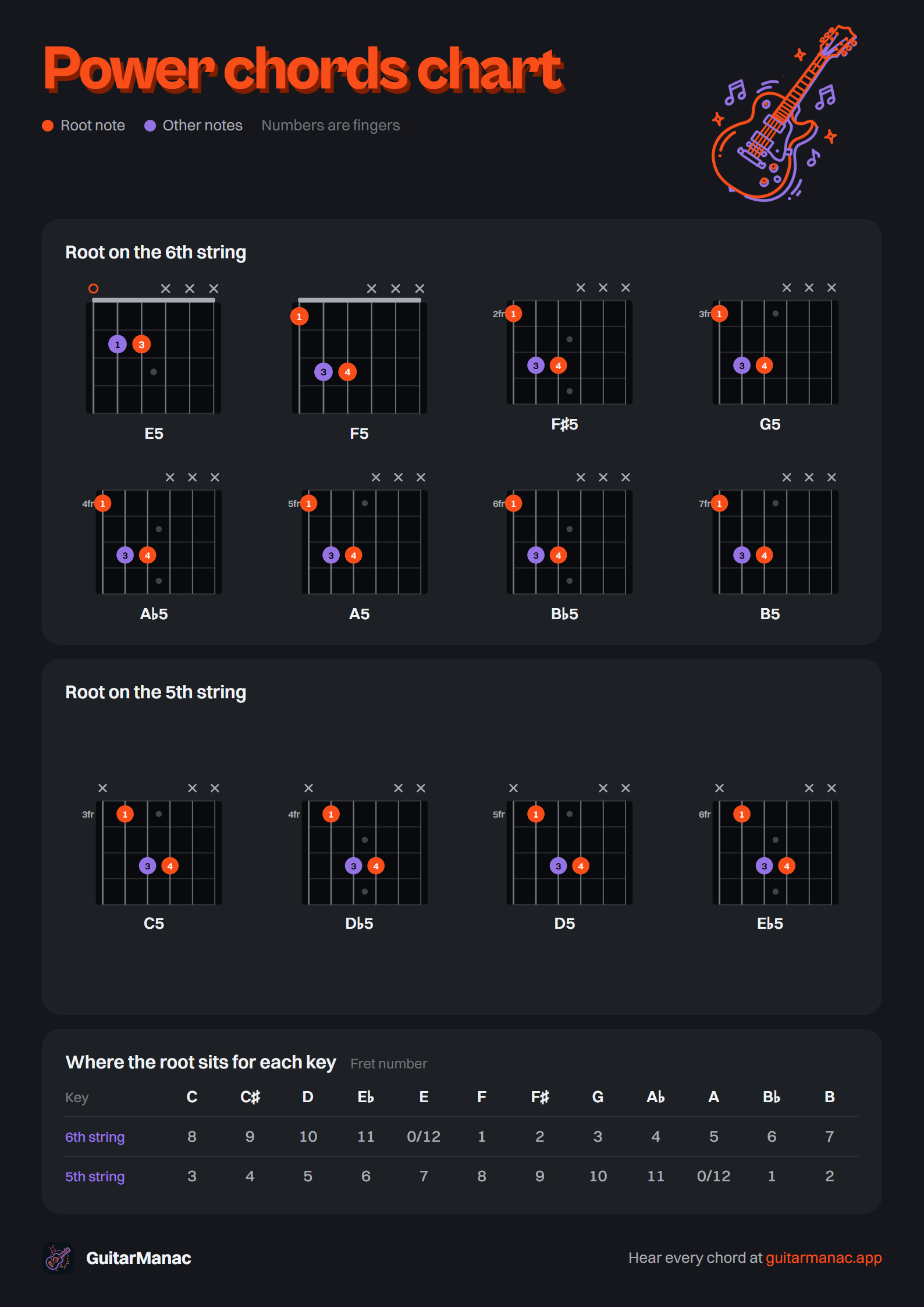
The 12 chords on the sheet
Press play to hear a chord. Open it for more shapes.
Root on the 6th string
Root on the 5th string
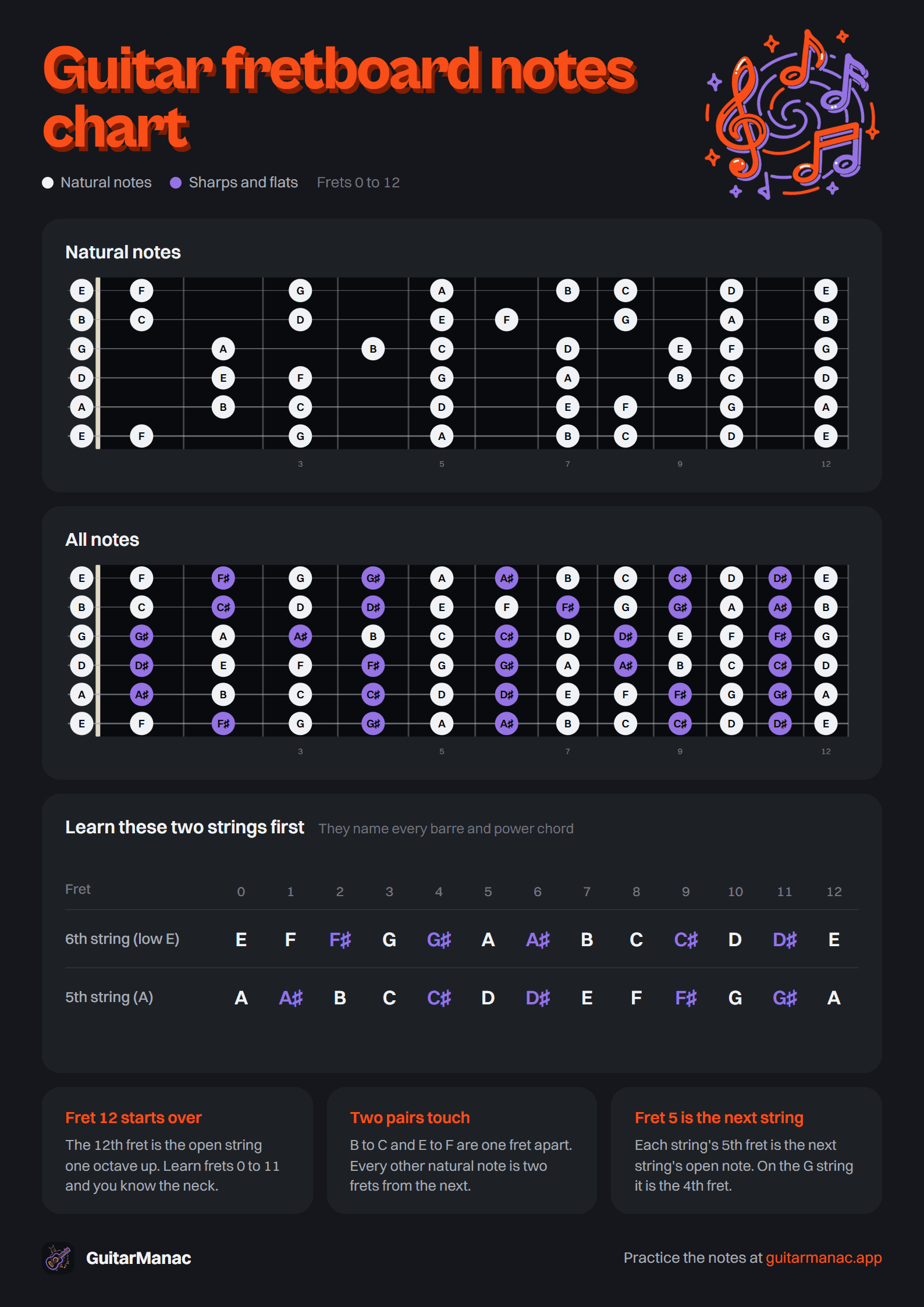
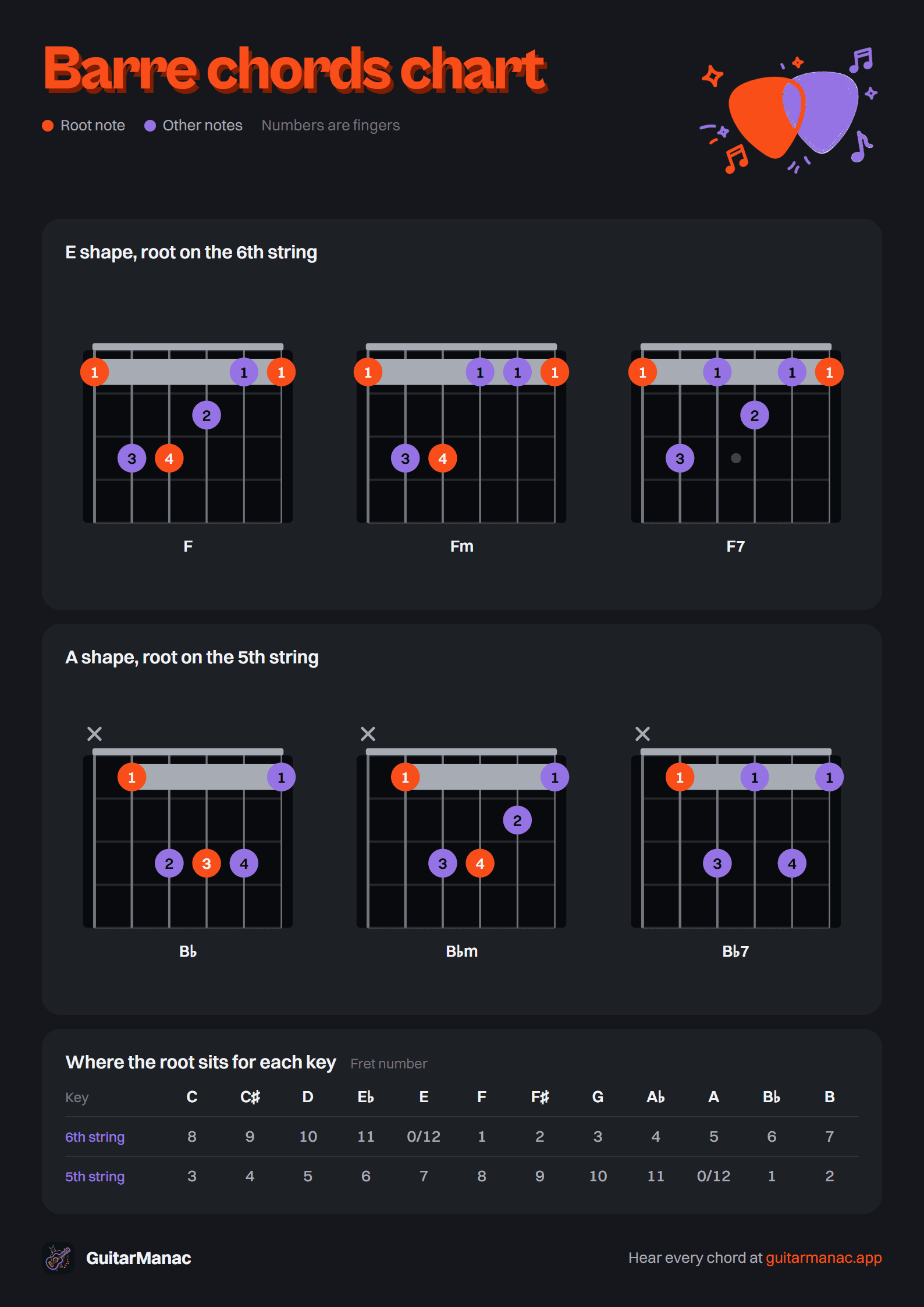
Where the root sits for each key
Fret numbers. Put the root of the shape on that fret to play it in that key.
| Key | C | C♯ | D | E♭ | E | F | F♯ | G | A♭ | A | B♭ | B |
|---|---|---|---|---|---|---|---|---|---|---|---|---|
| 6th string | 8 | 9 | 10 | 11 | 0/12 | 1 | 2 | 3 | 4 | 5 | 6 | 7 |
| 5th string | 3 | 4 | 5 | 6 | 7 | 8 | 9 | 10 | 11 | 0/12 | 1 | 2 |
Free practice game
Learn the changes, not only the shapes
Chord Switcher shows one chord after another on a beat. Start slow and speed up when the changes are clean.
Practice chord changesPrinted
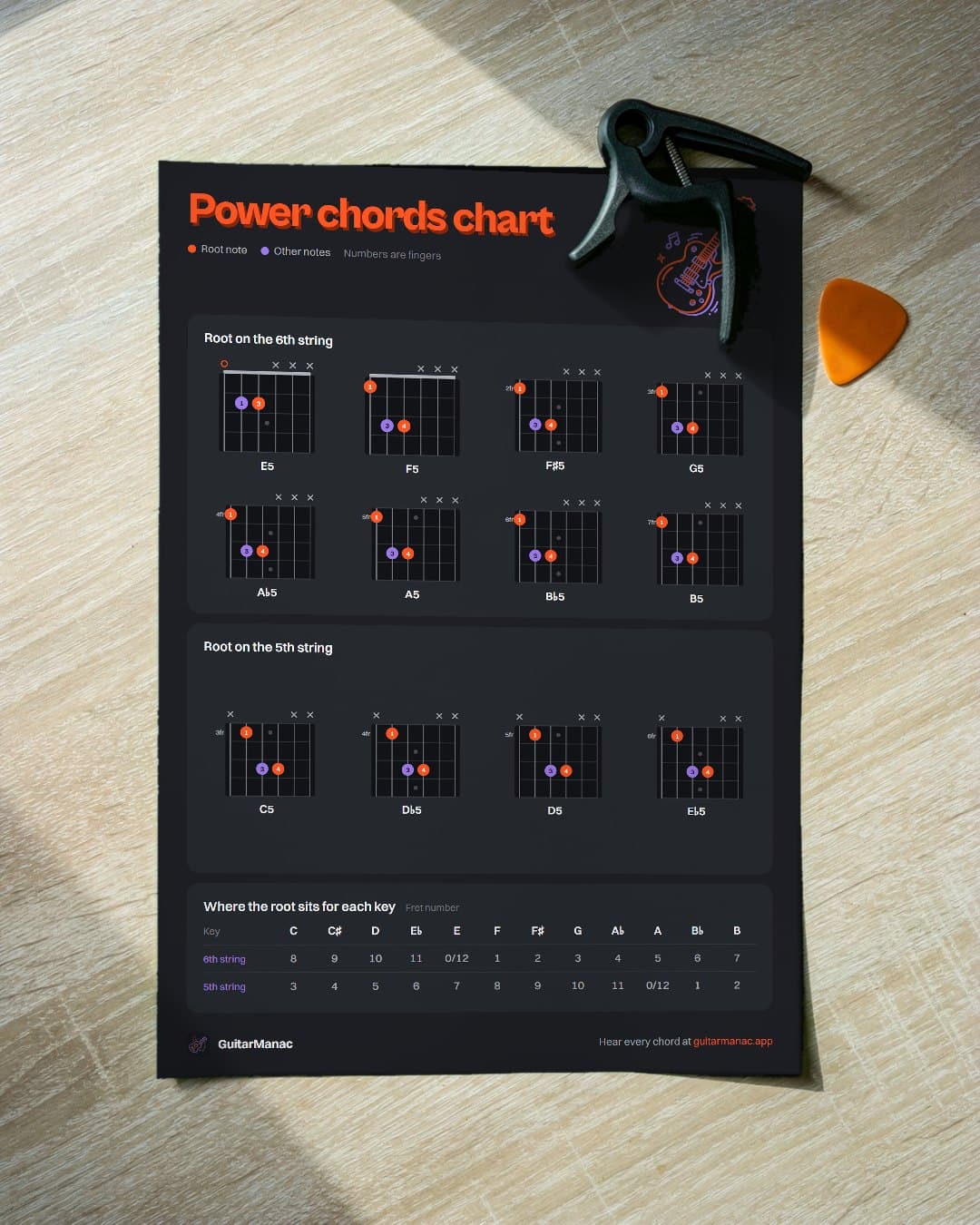
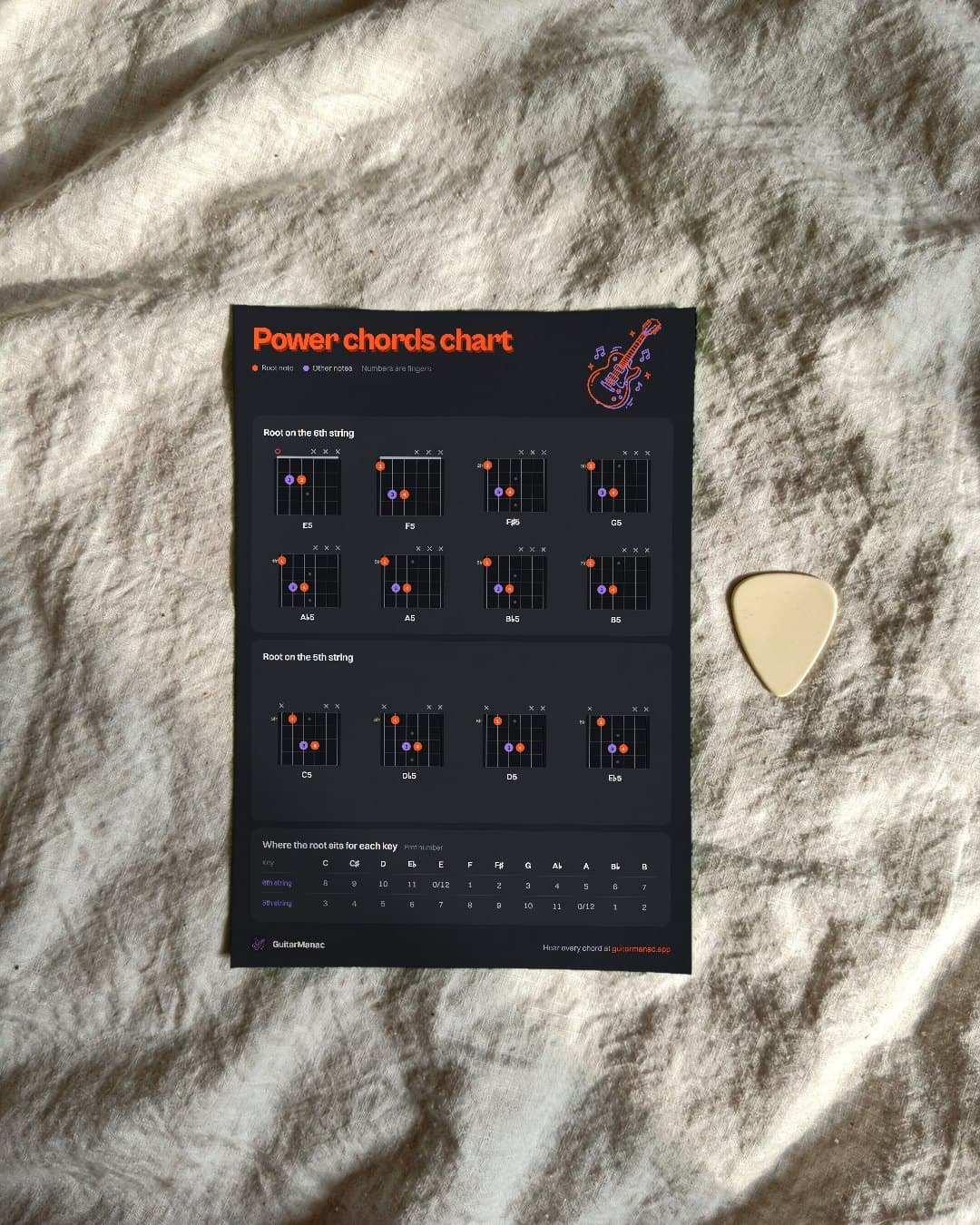
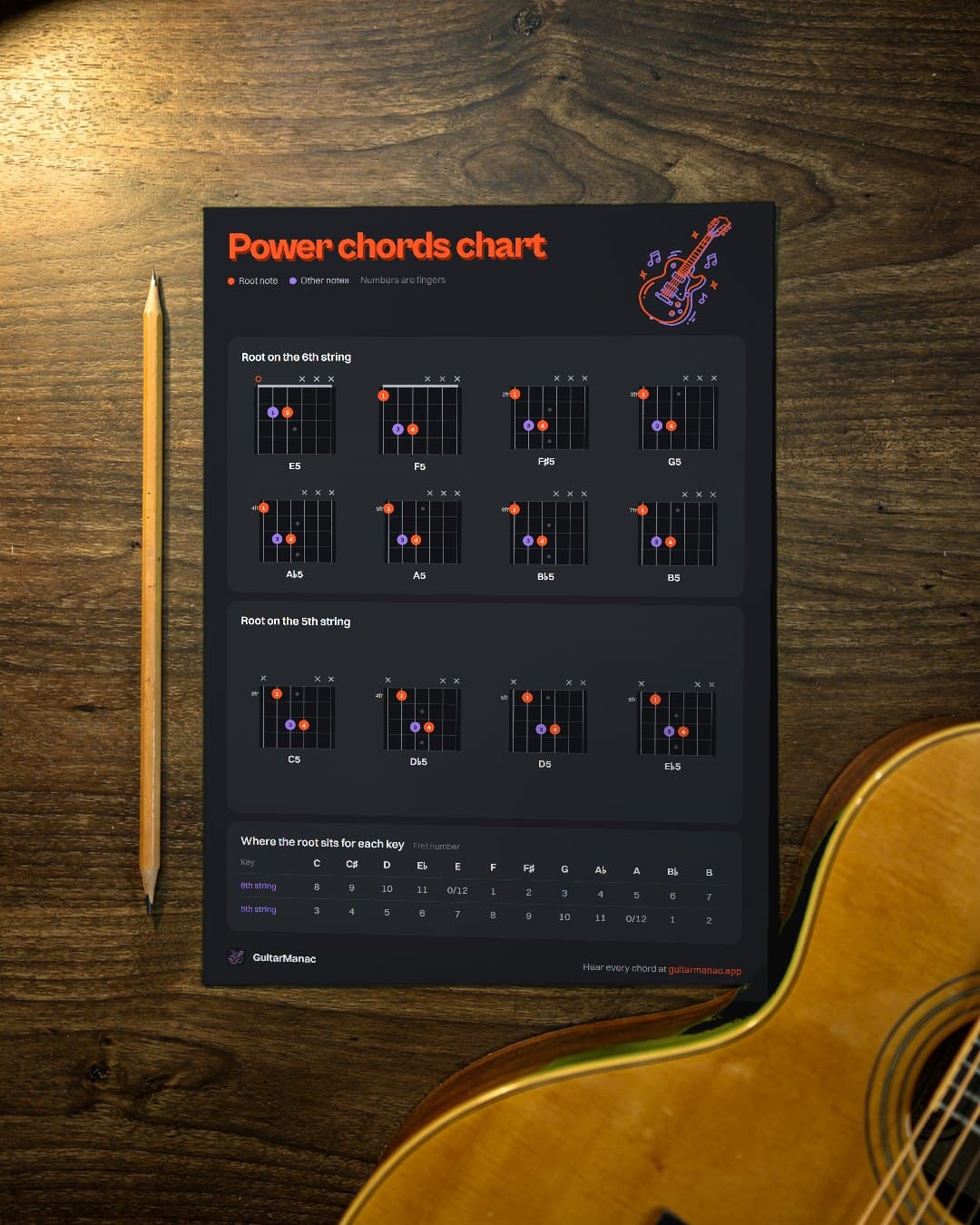
One shape for every key
A power chord is the root, the 5th above it and the root again an octave up. Put your first finger on the root, your third and fourth fingers two frets higher on the next two strings, and mute the rest.
Slide that shape along the low E string and the name follows the note under your first finger. Move it over to the A string for the same chords a little lower on the neck.
Why rock players use them
A power chord has no 3rd, so it is neither major nor minor. It fits almost any song and stays clear under heavy distortion, where full chords turn to mud.
Two-note versions work too. Drop the top note and play only the root and the 5th for faster riffs.