Barre chords chart
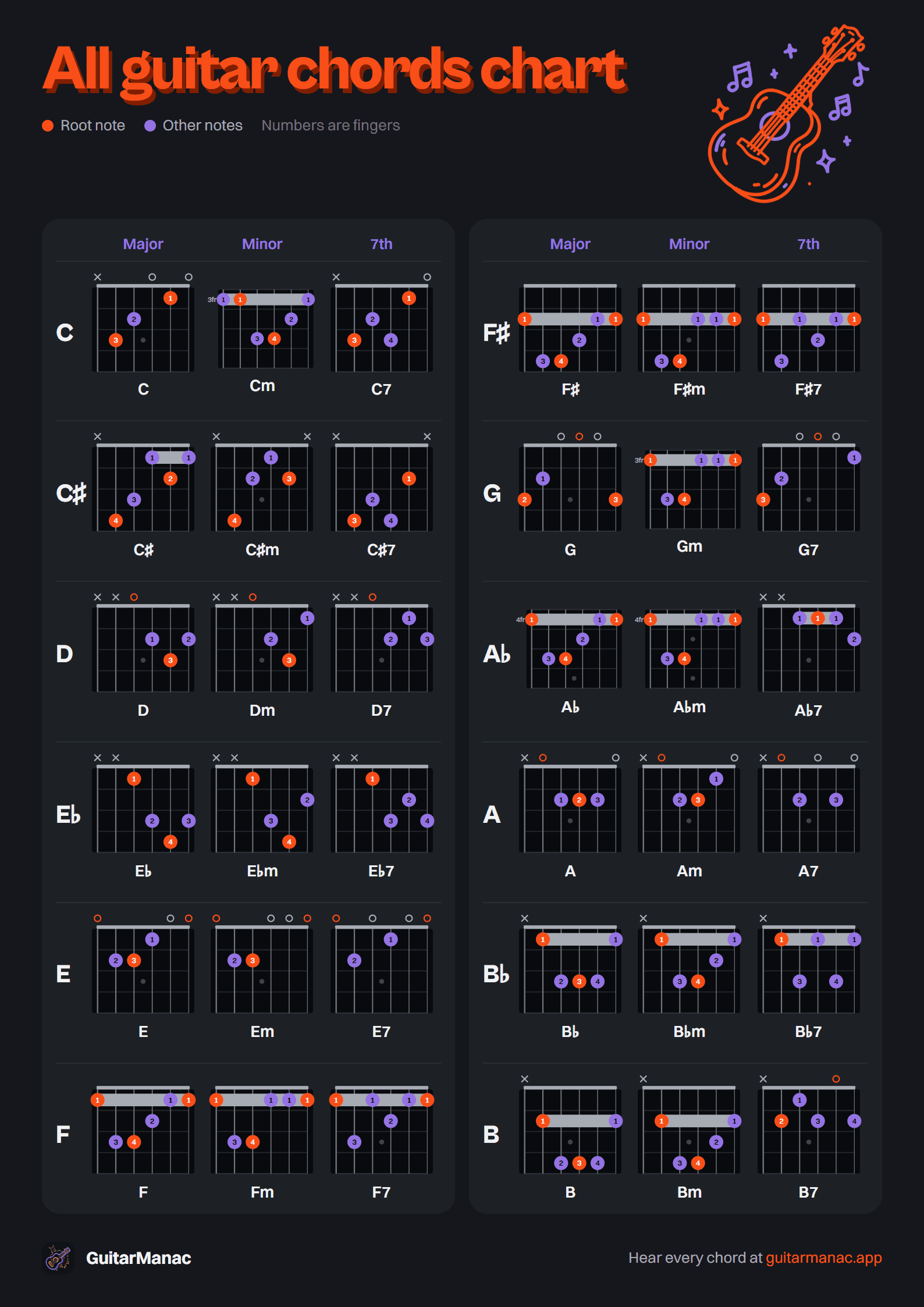
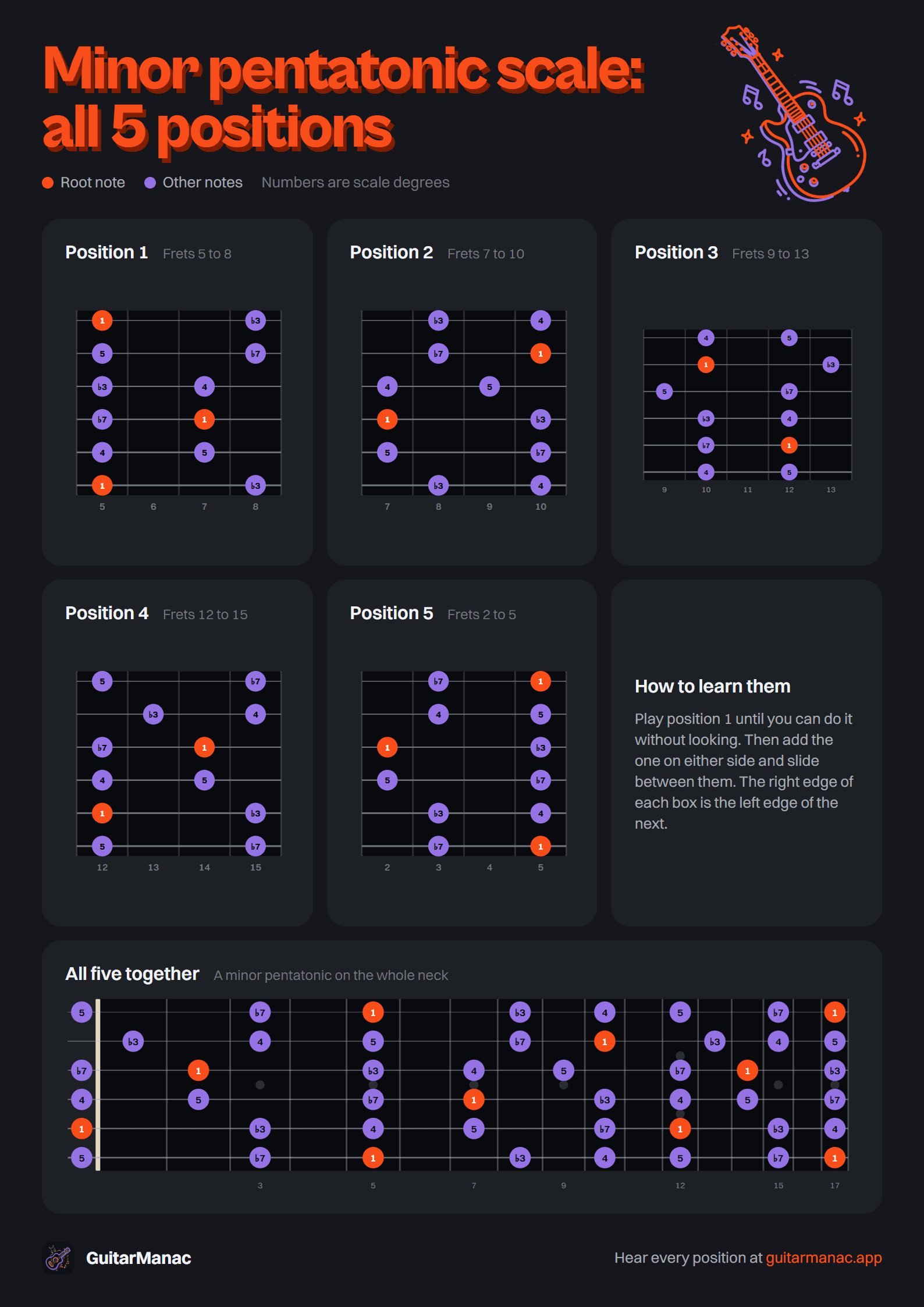
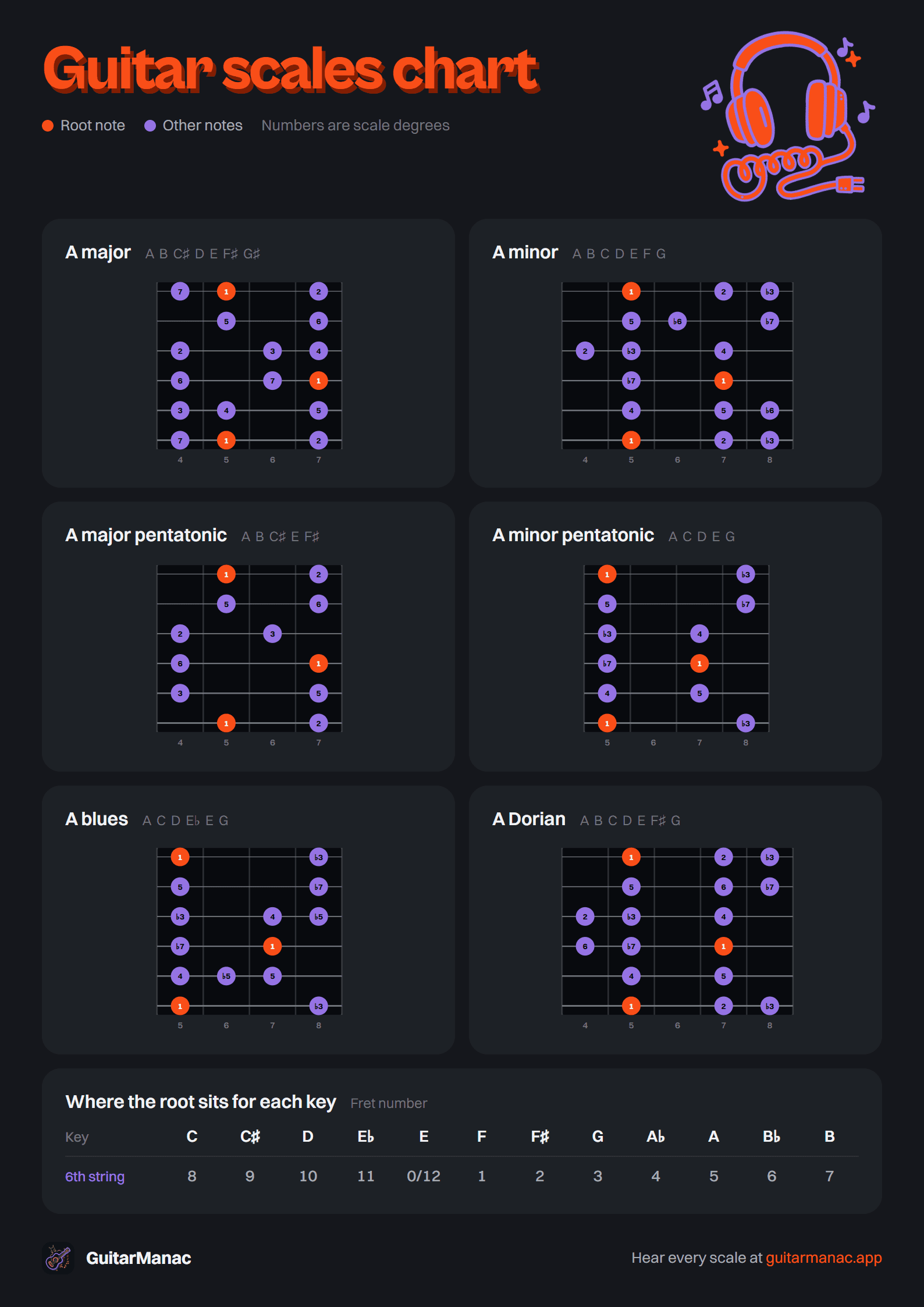
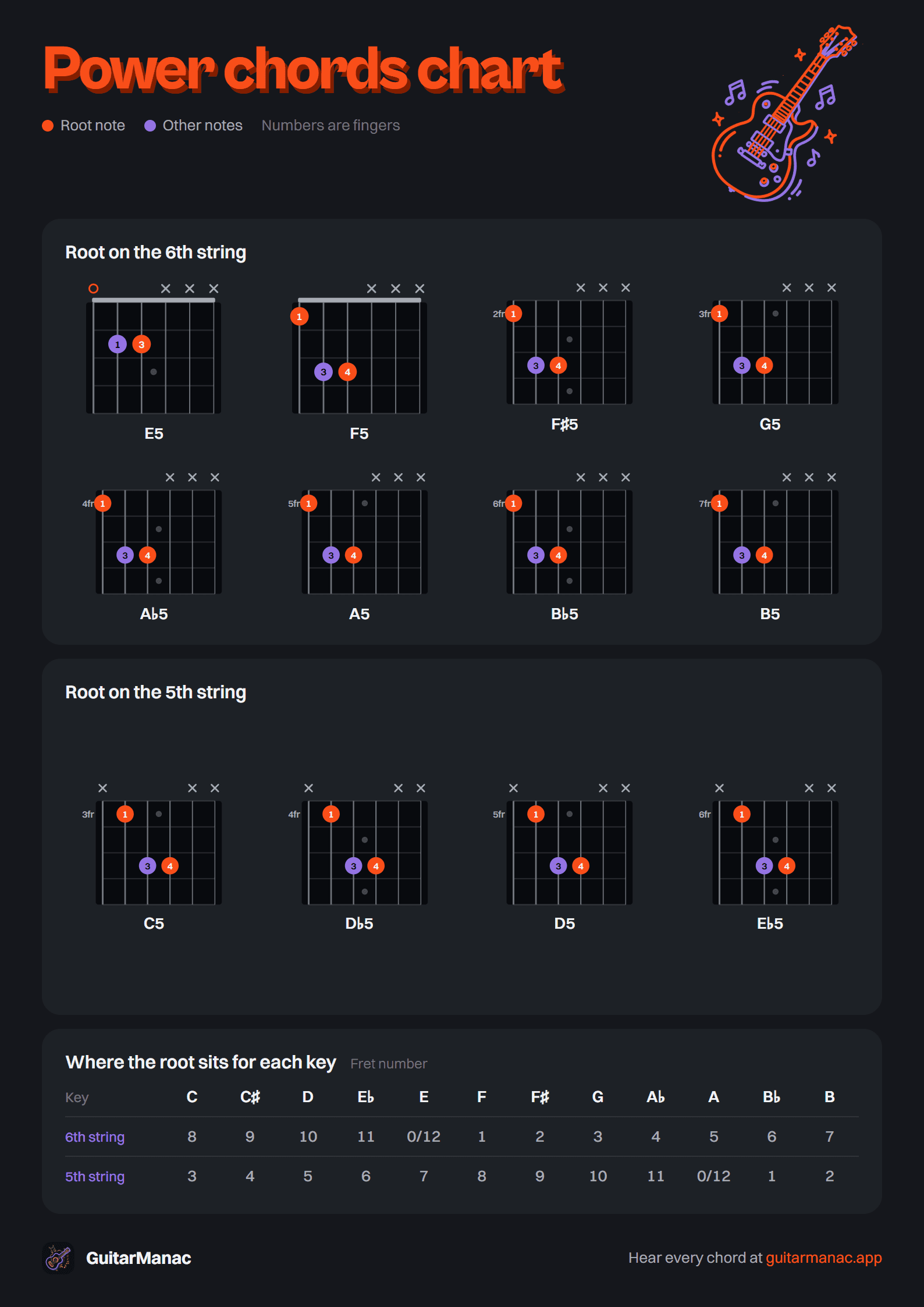
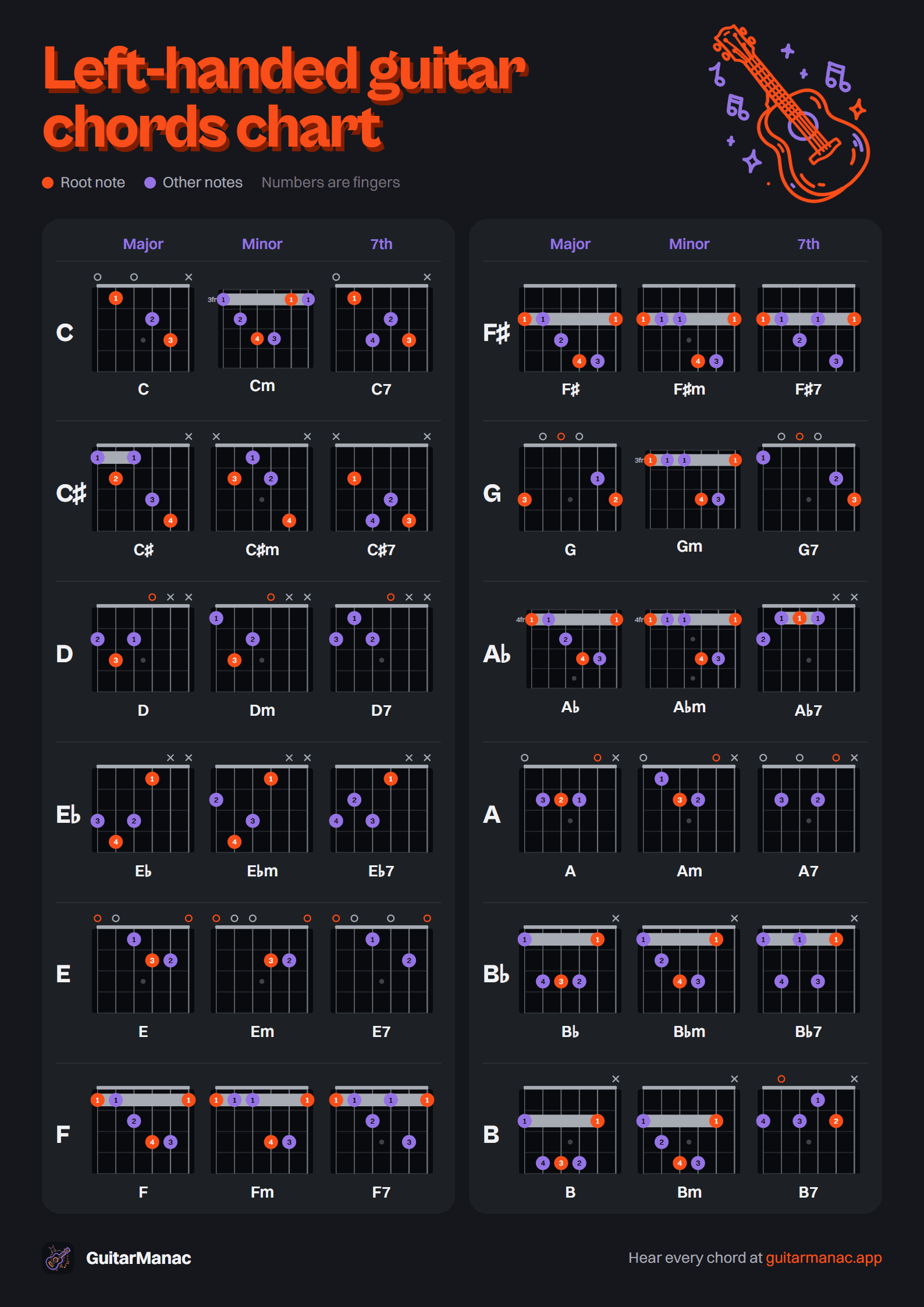
Six shapes that play almost every chord: E-shape and A-shape barre chords in major, minor and 7th, with a table of where to put them for each key.
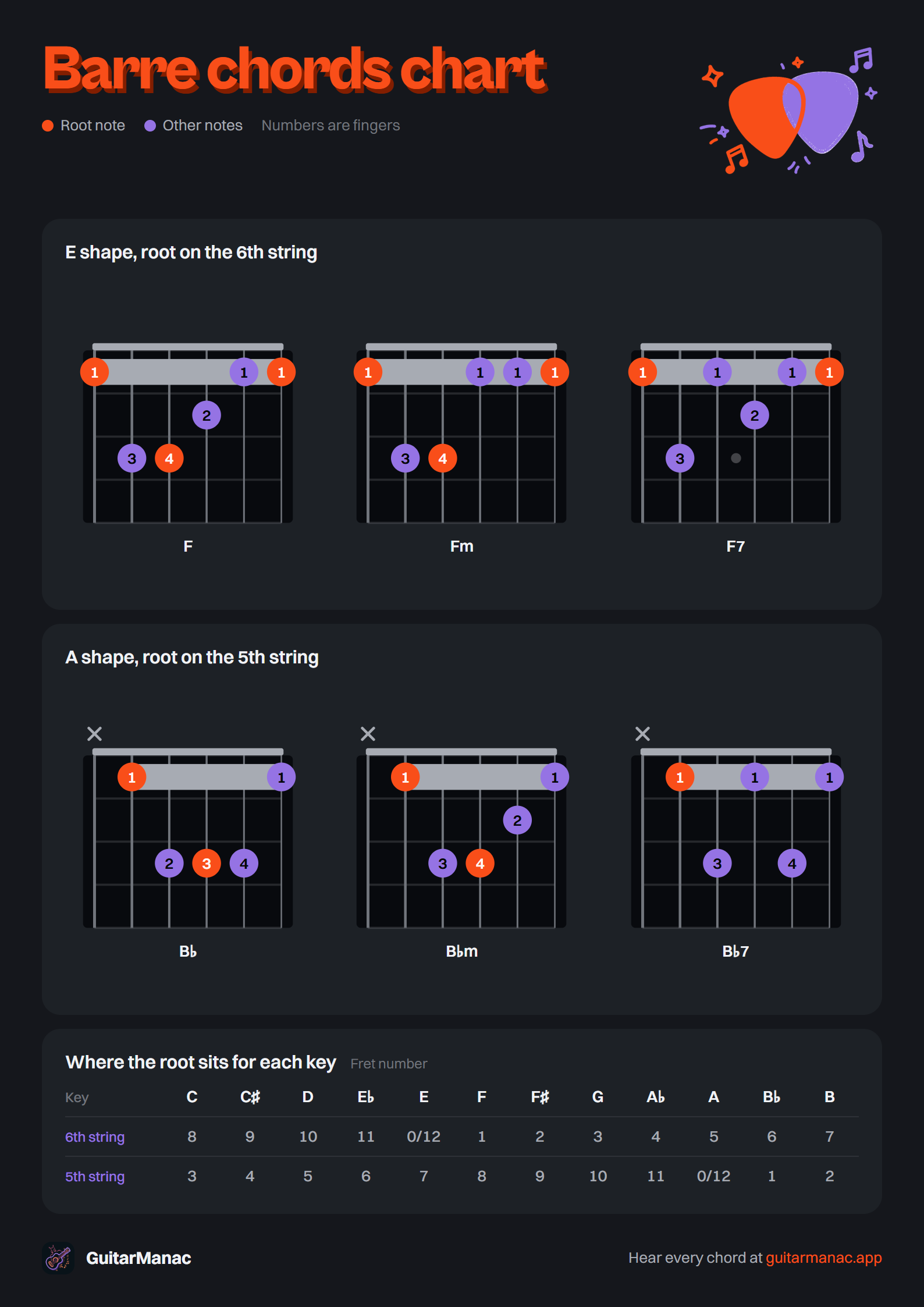
The 6 chords on the sheet
Press play to hear a chord. Open it for more shapes.
E shape, root on the 6th string
A shape, root on the 5th string
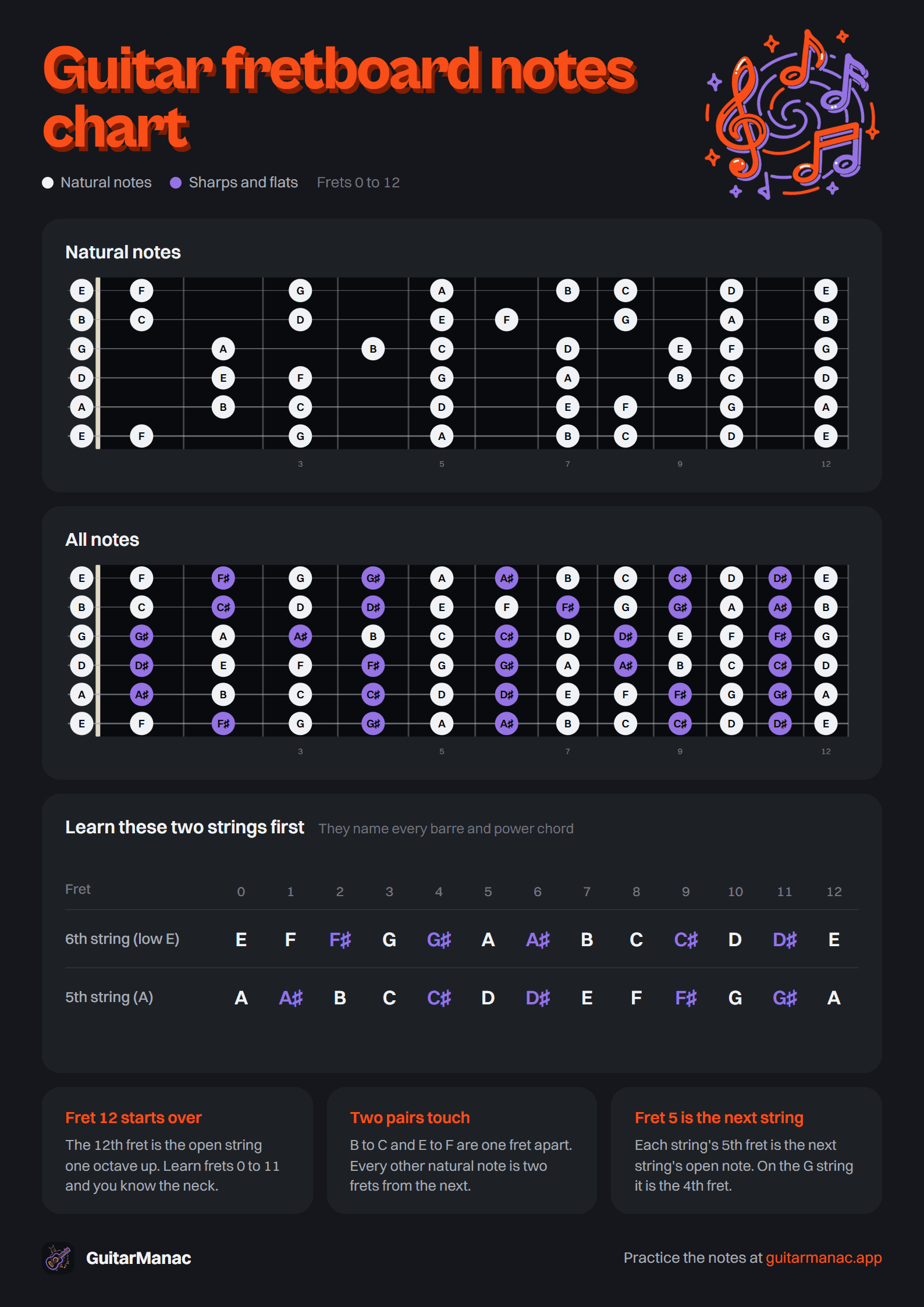
Where the root sits for each key
Fret numbers. Put the root of the shape on that fret to play it in that key.
| Key | C | C♯ | D | E♭ | E | F | F♯ | G | A♭ | A | B♭ | B |
|---|---|---|---|---|---|---|---|---|---|---|---|---|
| 6th string | 8 | 9 | 10 | 11 | 0/12 | 1 | 2 | 3 | 4 | 5 | 6 | 7 |
| 5th string | 3 | 4 | 5 | 6 | 7 | 8 | 9 | 10 | 11 | 0/12 | 1 | 2 |
Free practice game
Learn the changes, not only the shapes
Chord Switcher shows one chord after another on a beat. Start slow and speed up when the changes are clean.
Practice chord changesPrinted
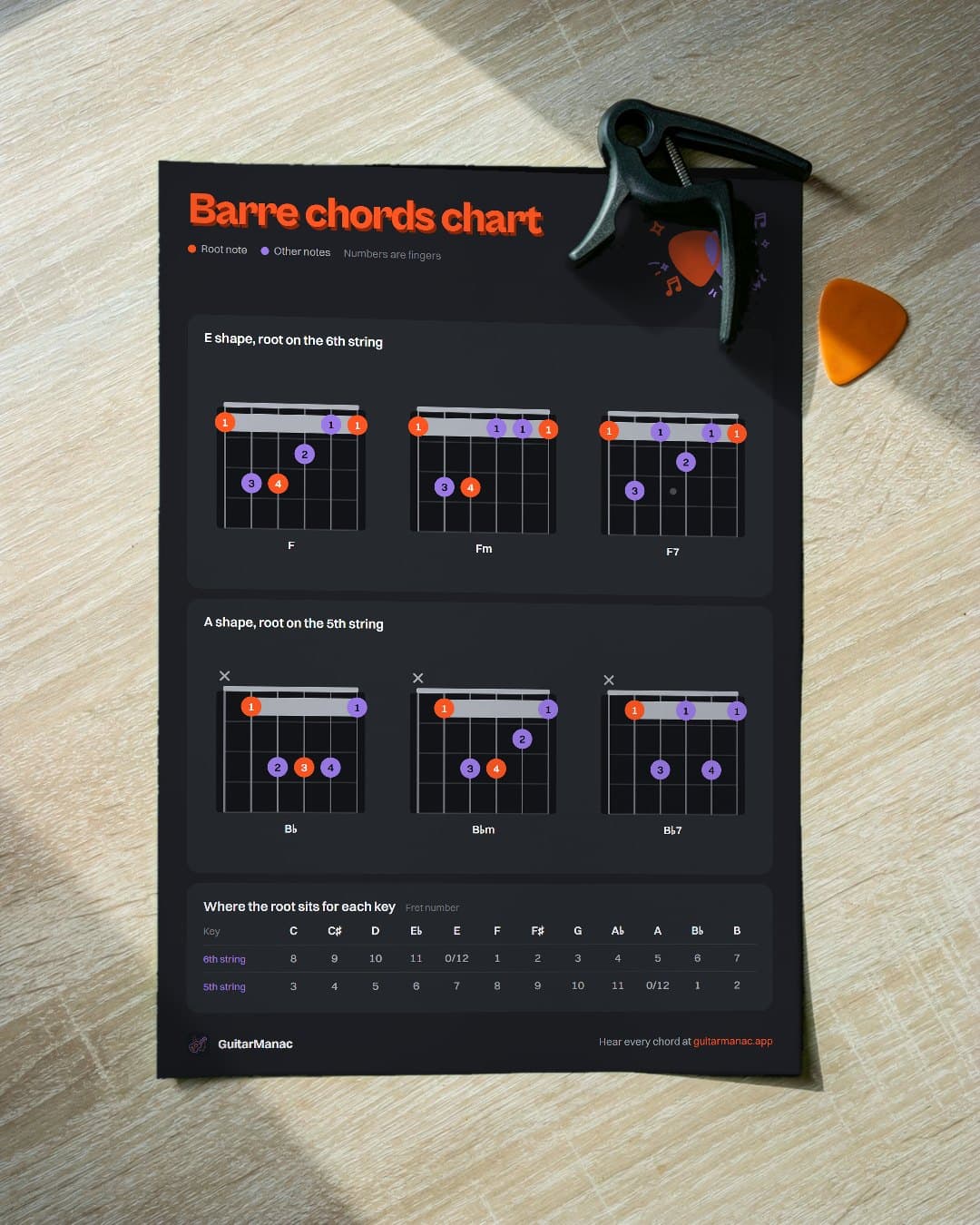
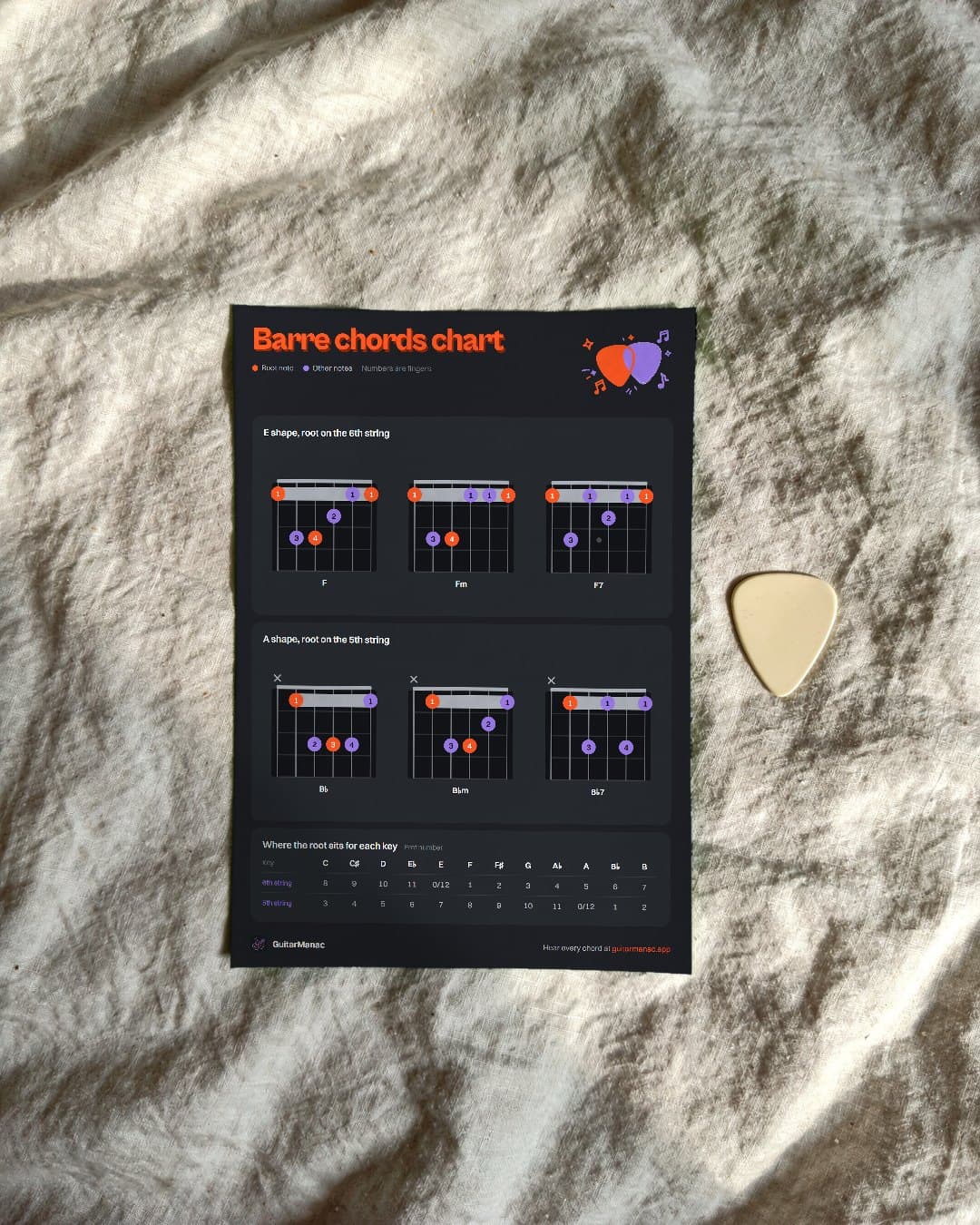
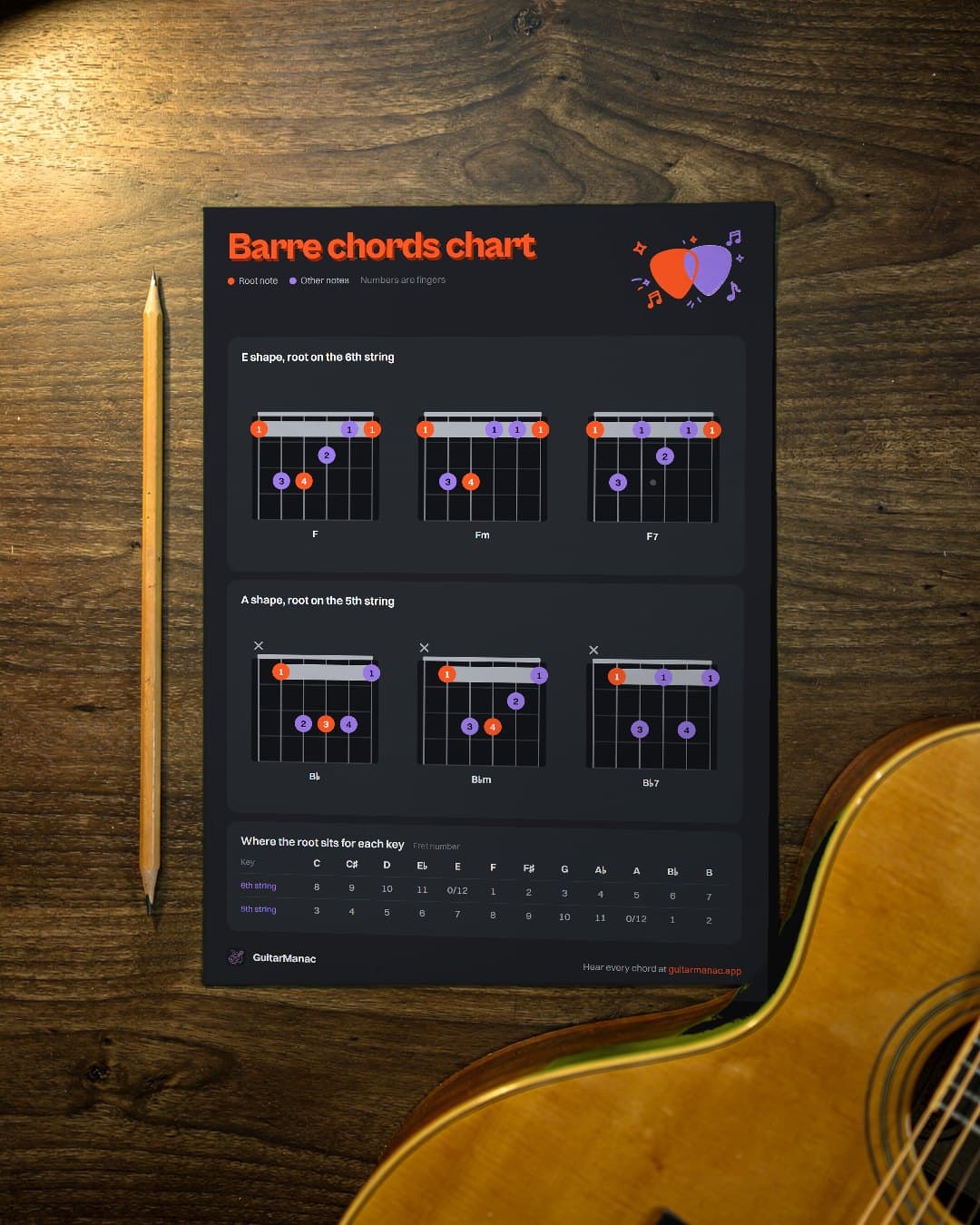
One shape, twelve chords
A barre chord is an open chord moved up the neck, with your first finger doing the job of the nut. The E-shape is the open E chord moved up. At the 1st fret it is F, at the 3rd fret G, at the 5th fret A.
The A-shape works the same way with the root on the 5th string. Between the two shapes you can play any major, minor or 7th chord within the first 7 frets.
Getting the barre to ring
Roll your first finger slightly onto its bony side and keep it close to the fret wire. Pull back a little with your arm instead of squeezing harder with your thumb.
Practice F for a minute a day before using it in songs. Most players need a few weeks before every string rings clean.